
Questioning The Status Quo

In aviation interior design, the most meaningful innovations rarely start from a blank slate. They usually begin when someone looks at a familiar space and asks a deceptively simple question, What if we …?
For me, few spaces feel as “set” as the aircraft galley – instantly recognizable, disciplined, and engineered for crew workflow, durability, and certification. But as airlines experiment with new service models and more customer-accessible offerings, I keep coming back to how we can make the galley feel less utilitarian and more welcoming.
What if we treated the galley less like a dressed-up utility closet – and more like a hospitality moment? Retail environments guide people with sightlines, lighting, and presentation. Could those same principles help airline customers feel comfortable approaching, browsing, and selecting what they need in flight?
That question became the foundation for the Parlor, a customer-facing social galley developed in collaboration with Boeing subsidiary EnCore, SEKISUI KYDEX, and ACLA Studio. At the 2026 Aircraft Interiors Expo, we invited guests to experience it in full scale – not as a rendering or a speculative study, but as a built environment they can walk up to and immediately understand.
How It Kicked Off
The funny thing is, the Parlor didn’t start as “let’s design a galley.” It began as a conversation about AIX and what we wanted visitors to experience when they stepped onto the SEKISUI KYDEX stand. We kept coming back to the same idea that if we’re going to put something on the show floor, let’s not build a prop. Let’s build something that an airline, designer, or manufacturer can stand in front of and start asking the right questions.
Ben Smalley, our VP – Business Development, came up with an early and compelling concept: a galley with interchangeable components, so we could refresh the look year after year without starting over. That idea of “modular evolution” immediately set the stage for a flexible, system-based approach that we felt could work well for airlines.

Not long after our initial discussions post-AIX 2025, I returned from Milan Design Week, thoroughly inspired by the “bridging worlds” moments I had seen – especially the Boffi luxury kitchen installations with their stylish layered effects: fluted glass, natural marble, rich woodgrain textures, and hidden lighting. I began dreaming about how our materials could be used to create a game-changing moment in the industry by introducing something resi-mercial in nature – a functioning aircraft galley that would be curated and customer-centric.

We began to ask ourselves, what if we collaborated on a Social Galley for AIX 2026 and beyond? Something designed for customer interaction, not just a display that would really showcase our specialty materials and technology. And instead of building it ourselves, what if we partnered with a galley manufacturer, so the outcome would feel credible and buildable?
We agreed that I would reach out to Tom Eaton, Chief Designer – Cabin & Interiors for Boeing subsidiary EnCore, with whom we were already working on several other concepts. Tom’s response to the potential collaboration was immediate and enthusiastic, and ensured that the project would be grounded in practical expertise and ready for real-world applications.
From our side at SEKISUI KYDEX, we wanted to step the galley up a notch, using our Infused Imaging™ Technology coupled with our other specialty products, to bring Milan-level style and material authenticity while remaining true to the requirements of commercial aviation interiors. And because we were redesigning our stand, we could imagine the galley living in our lounge area as a real-use moment providing water, small treats, and a place for our guests to pause while waiting for their meetings to begin, right alongside our from-the-bar coffee and cocktail service. In other words, the exhibit wasn’t just a backdrop. It was a live demonstration of the kind of passenger behavior we’re designing for.


Why We Built It (And Why That Matters)
If you’ve been around aviation long enough, you’ve seen it: a concept that looks incredible on screen, then gets “value engineered” into something unrecognizable once the real-world constraints kick in. In a galley, where split lines, edge conditions, cleanability, lighting interactions, and access points all matter, those details aren’t problems to be addressed later. They are the experience.
From the beginning, our goal was to create something designers, airlines, and manufacturers could react to quickly – and discuss openly. A space that feels hospitality-inspired but also signals integration credibility. Because in my experience, the ideas that stick are the ones that respect both imagination and what’s achievable. Being pragmatic about my marketing vision at the airline was what earned the trust of our engineering team – and helped turn customer wants and needs into changes we could actually implement.
Materiality Is The Message (And Lighting Changes Everything)


In the Parlor, every surface has a job to do, including looking refined, handling traffic, and staying easy to maintain, especially for crew members who may need to wipe it down mid-flight. Because this is a customer touchpoint, those surfaces also need to work with lighting and support brand expression. When a designer tells me they want a space to feel “more hospitality-driven,” my first thought isn’t a single custom color. It’s the full system, from geometry, material, and finish, to how the light will move across it.
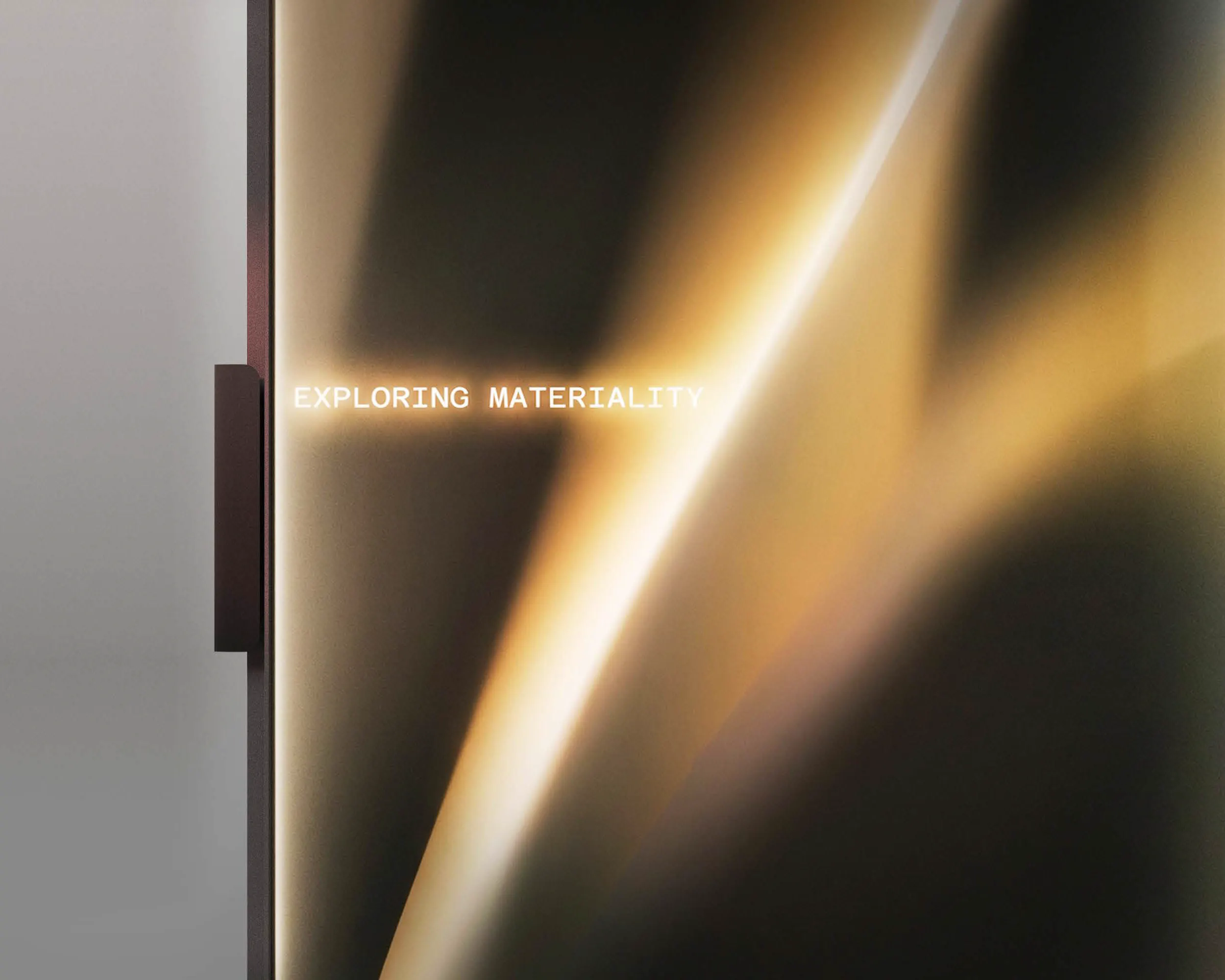
That’s why the team approached lighting and materials as one integrated aspect. Specialty lighting, surface response, and translucent and illuminated elements work together to add depth, soften transitions, and reduce visual mass – especially important in an area that can easily read as a solid block in the cabin.
Branding That’s Embedded, Not Applied
Brand expression has become a top priority for many airlines, and it’s a recurring theme in my conversations with airline teams and design partners. Rather than being confined to marketing messages, signage, or soft goods, an airline’s brand can be successfully integrated into the premium cabin environment. By incorporating thoughtful architectural elements and carefully chosen materials, the space can quietly convey to airline customers, “This environment was designed with your experience in mind.”
In the Parlor, we explored how airlines can embed their branding directly into monuments through materiality – using KYDEX® Thermoplastics and design-forward surface options that can deliver opaque, non-slip, translucent, and illuminated effects within one cohesive environment. It’s a subtle shift, but an important one. Brand expression becomes part of the structure, not something applied at the end.

Uniting Around a Shared Vision
I love collaborative projects like this because the best outcomes don’t come from “handoffs” – they come from overlap, where teams share ideas early and build solutions together. In this case:
- EnCore: anchored the vision and led industrial design, ensuring the focus remained on airline and OEM realities, turning a bold idea into something that feels program-ready.
- ACLA Studio: helped translate hospitality cues into industrial design choices, making the galley feel welcoming and engaging for airline customers through form, openness, and storytelling.
- SEKISUI KYDEX: concentrated on material solutions that perform in a high-traffic, customer-facing environment – durability and cleanability, plus surfaces that respond beautifully to cabin lighting.


Here’s What I Hope You’ll Notice About The Parlor

- How openness and sightlines change the psychology of approaching a galley
- How retail-style presentation makes passenger use intuitive – without instructions
- How lighting and translucency add depth and soften the architecture
- How airline branding can be structural – expressed through surfaces and illumination, not decals
- How airlines can easily rotate snacks and amenities throughout the flight, and gain valuable stowage space in lower drawers
The Parlor isn’t tied to a single airline program, and it’s not a one-size-fits-all product you install “as is.” It’s a reference point – a built conversation starter – meant to help airlines and their design partners move faster from inspiration to a practical, program-ready direction.
I’d love to hear what you’re wrestling with right now. Is it passenger flow, service models, brand expression, or materials that behave beautifully under cabin lighting? Tell me, if you could change one thing about the galley experience on your next program, what would it be?
Let’s keep the conversation going in the comment section below.
Read the full Parlor Innovation Story here.

Leave a Reply