Section 1: Identification of the Substance/Mixture and of the Company/Undertaking
1.1 Product identifier
Product Name
KYDEX® 100
Synonyms
KYDEX® Thermoplastic sheet, PVC/PMMA alloy
1.2 Relevant identified uses of the substance or mixture and uses advised against
Relevant identified use(s)
Thermoforming
1.3 Details of the supplier of the safety data sheet
Manufacturer
SEKISUI Polymer Innovations, LLC
6685 Low Street
Bloomsburg, PA 17815
United States
www.sekisui-spi.com
info@sekisui-spi.com
Telephone (General)
570-387-6997
1.4 Emergency telephone number
Manufacturer
(570) 387-6997 – Company Emergency Telephone
Manufacturer
1-800-424-9300 – CHEMTREC
Section 2: Hazards Identification
EU/EEC
According to Regulation (EC) No 1272/2008 (CLP)/REACH 1907/2006 [amended by 453/2010]
According to EU Directive 67/548/EEC (DSD) or 1999/45/EC (DPD)
2.1 Classification of the substance or mixture
CLP
This material is an article. This material is not expected to pose any hazards under normal conditions of use. Hazards represented on this document are due to potential dusts/vapors generated during use. Specific Target Organ Toxicity Repeated Exposure 2 – H373
DSD/DPD
Harmful (Xn) R48/20
2.2 Label Elements
CLP
WARNING
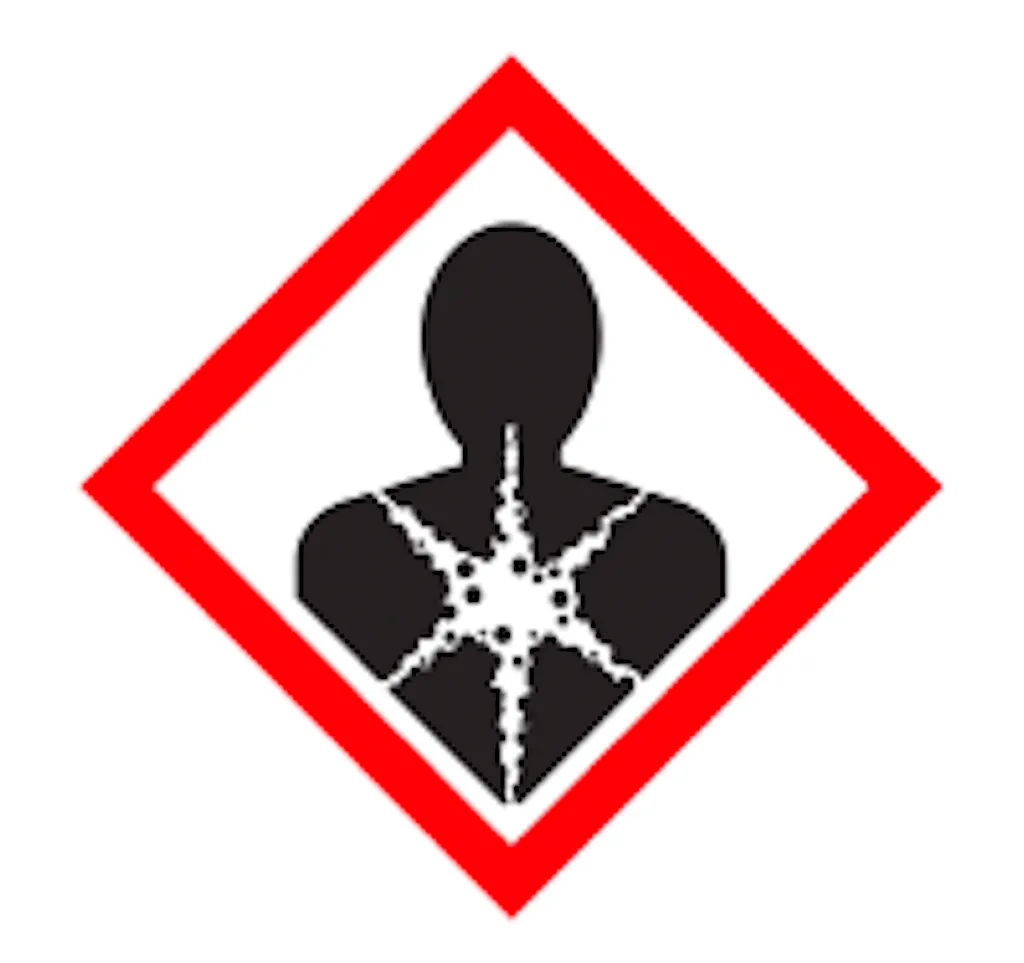
Hazard statements
H373 – May cause damage to organs through prolonged or repeated exposure.
Precautionary statements
Prevention
P260 – Do not breathe dust.
Response
P314 – Get medical advice/attention if you feel unwell.
Storage/Disposal
P501 – Dispose of content and/or container in accordance with local, regional, national, and/or international regulations.
DSD/DPD

Risk phrases
R48/20 – Harmful: danger of serious damage to health by prolonged exposure through inhalation.
2.3 Other Hazards
CLP
According to Regulation (EC) No. 1272/2008 (CLP) this material is considered hazardous.
DSD/DPD
According to European Directive 1999/45/EC this material is considered dangerous.
United States (US)
According to OSHA 29 CFR 1910.1200 HCS
2.1 Classification of the substance or mixture
OSHA HCS 2012
This material is an article. This material is not expected to pose any hazards under normal conditions of use. Hazards represented on this document are due to potential dusts/vapors generated during use.
Specific Target Organ Toxicity Repeated Exposure 2 – H373
Combustible Dust
2.2 Label elements
OSHA HCS 2012
WARNING
Hazard statements
Precautionary statements
May cause damage to organs – Lungs through prolonged or repeated exposure – H373
Prevention
Do not breathe dust. – P260
Response
Get medical advice/attention if you feel unwell. – P314
Storage/Disposal
Dispose of content and/or container in accordance with local, regional, national, and/or international regulations. – P501
2.3 Other hazards
OSHA HCS 2012
Under United States Regulations (29 CFR 1910.1200 – Hazard Communication Standard), this product is considered hazardous.
Canada
According to WHMIS
2.1 Classification of the substance or mixture
WHMIS
This material is an article. This material is not expected to pose any hazards under normal conditions of use. Hazards represented on this document are due to potential dusts/vapors generated during use.
Other Toxic Effects – D2B
2.2 Label Elements
WHMIS

2.3 Other hazards
WHMIS
Other Toxic Effects – D2B
In Canada, the product mentioned above is considered hazardous under the WHMIS Workplace Hazardous Materials Information System (WHMIS).
Section 3 – Composition/Information on Ingredients
3.1 Substances
Material does not meet the criteria of a substance in accordance with Regulation (EC) No 1272/2008.
3.2 Mixtures
| Composition | |||||
|---|---|---|---|---|---|
| Chemical Name | Identifiers | % | LD50/LC50 | Classifications According to Regulation/Directive | Comments |
| Polyvinyl Chloride | CAS: 9002-86-2 | 60% TO 100% | NDA |
EU DSD/DPD: Self Classified: Xn R48/20 EU CLP: Self Classified: STOT RE 2, H373 OSHA HCS 2012: STOT RE 2 (Lungs); Comb. Dust |
NDA |
| Acrylic Polymers | NDA | 10% TO 30% | NDA |
EU DSD/DPD: Not Classified EU CLP: Not Classified OSHA HCS 2012: Comb. Dust |
NDA |
| Organic Waxes | NDA | 1% TO 5% | NDA |
EU DSD/DPD: Not Classified EU CLP: Not Classified OSHA HCS 2012: Not Classified |
NDA |
| 8-Oxa-3,5-dithia-4-stannatetradecanoic acid, 10-ethyl-4,4-dimethyl-7-oxo-, 2-ethylhexyl ester | CAS: 57583-35-4 EINECS: 260-829-0 |
0.6% TO 4% | NDA |
EU DSD/DPD: Repr. Cat. 3 R63; T R48/25; Xn R22; R43 EU CLP: Self Classified: Repr. 2, H361d; Acute Tox. 4, H302; STOT RE 1 (Nervous system, Immune system), H372; Skin Sens. 1A, H317 OSHA HCS 2012: Skin Irrit. 2; Eye Irrit. 2B; Skin Sens. 1B; STOT RE 1 (CNS, Liver, Kidney) |
NDA |
| Stannane, methyltris(2-ethylhexyloxycarbonylmethylthio)- | CAS: 57583-34-3 EINECS: 260-828-5 |
0.2% TO 2% | Ingestion/Oral-Rat LD50: 920 mg/kg |
EU DSD/DPD: Self Classified: Repr. Cat. 3 R63 EU CLP: Self Classified: Repr. 2, H361d OSHA HCS 2012: Acute Tox. 4 (oral); Skin Irrit. 2; STOT RE 1 (CNS) |
NDA |
See Section 16 for full text of H-statements and R-phrases.
Section 4 – First Aid Measures
4.1 Description of first aid measures
Inhilation
If irritation occurs from dust or vapors from excessive heating, Move victim to fresh air. Inhalation Administer oxygen if breathing is difficult. Give artificial respiration if victim is not breathing. If signs/symptoms continue, get medical attention.
Skin
Cool skin rapidly with cold water after contact with hot polymer. Wash skin with soap Skin and water. Get medical attention if symptoms occur. If irritation occurs from dust or vapors from excessive heating, Flush eyes with water Eye for at least 15 minutes. If eye irritation persists: Get medical advice/attention.
Ingestion
Not a likely route of exposure.Ingestion
4.2 Most important symptoms and effects, both acute and delayed
Refer to Section 11 – Toxicological Information.
4.3 Indication of any immediate medical attention and special treatment needed
Notes to Physician
Immediate medical attention after exposure to this material not expected to be Notes to Physician necessary. No special treatment indicated related to exposure to this material.
Section 5 – Firefighting Measures
5.1 Extinguishing media
Suitable Extinguishing Media
Water, carbon dioxide, dry chemical or foam.
Unsuitable Extinguishing Media
None known
5.2 Special hazards arising from the substance or mixture
Unusual Fire and Explosion Hazards
Avoid generating dust; fine dust dispersed in air in sufficient concentrations, and in the Unusual Fire and Explosion presence of an ignition source is a potential dust explosion hazard. Hazards Polyvinyl chloride-based material will NOT continue to burn after ignition without an external heat source. When burning, or at temperatures above 425°F, slow evolution of hydrogen chloride could occur.
Hazardous Combustion Products
Hydrogen chloride, carbon monoxide, carbon dioxide.
5.3 Advice for firefighters
Wear positive pressure self-contained breathing apparatus (SCBA). Structural firefighters’ protective clothing will only provide limited protection.
Section 6 – Accidental Release Measures
6.1 Personal precautions, protective equipment and emergency procedures
Personal precautions
No special precautions expected to be necessary if material is used under ordinary Personal Precautions conditions and as recommended. KYDEX® Thermoplastic sheets will not spill or leak; it is solid; however, dust from machining the product may leak or spill. Wear appropriate personal protective equipment if processing dust is leaked or spilled.
Emergency Procedures
Contain spill and monitor for excessive dust accumulation. Avoid unnecessary Emergency Procedures personnel and equipment traffic in the spill area.
6.2 Environmental precautions
No special environmental precautions necessary.
6.3 Methods and material for containment and cleaning up
Containment/Clean-up Measures
If dust or powder from cutting and machining the plastic sheet is spilled, vacuum or Containment/Clean-up sweep up and place in containers for recovery or disposal. Measures Avoid generating dust. Use clean nonsparking tools to collect material. Dust Deposits should not be allowed to accumulate on surfaces, as these may form an explosive mixture if they are released into the atmosphere in sufficient concentration.
6.4 Reference to other sections
Refer to Section 8 – Exposure Controls/Personal Protection and Section 13 – Disposal Considerations.
Section 7 – Handling and Storage
7.1 Precautions for safe handling
Handling
Use good safety and industrial hygiene practices. Do not use in areas without Handling adequate ventilation. Minimize dust generation and accumulation. Routine housekeeping should be instituted to ensure that dusts do not accumulate on surfaces. Dry powders can build static electricity charges when subjected to the friction of transfer and mixing operations. Provide adequate precautions, such as electrical grounding and bonding, or inert atmospheres. Take proper care when moving, loading, or unloading. Electrostatic charge may build up during handling; grounding of equipment is recommended. Wear appropriate personal protective equipment when machining this product. Avoid inhalation of dust.
7.2 Conditions for safe storage, including any incompatibilities
Storage
Store in a dry area below 100°F (37.7°C)Storage
7.3 Specific end use(s)
Refer to Section 1.2 – Relevant identified uses.
Section 8 – Exposure Controls/Personal Protection
8.1 Control parameters
| Exposure Limits/Guidelines | ||||||
|---|---|---|---|---|---|---|
| Result | ACGIH | Australia | Canada Ontario | Canada Quebec | China | |
| Stannane, methyltris(2-ethylhexyloxycarbonylmethylthio) – as Tin organic compounds | STELs | 0.2 mg/m3 STEL (as Sn) as Tin organic compounds |
0.2 mg/m3 STEL (as Sn) as Tin organic compounds |
0.2 mg/m3 STEL (as Sn) as Tin organic compounds |
0.2 mg/m3 STEV (as Sn) as Tin organic compounds |
Not established |
| TWAs | 0.1 mg/m3 TWA (as Sn) as Tin organic compounds |
0.1 mg/m3 TWA (as Sn) as Tin organic compounds |
0.1 mg/m3 TWA (as Sn) as Tin organic compounds |
0.1 mg/m3 TWAEV (as Sn) as Tin organic compounds |
Not established | |
| 8-Oxa-3,5-dithia-4-stannatetradecanoic acid, 10-ethyl-4,4-dimethyl-7-oxo-, 2-ethylhexyl ester as Tin organic compounds | STELs | 0.2 mg/m3 STEL (as Sn) as Tin organic compounds |
0.2 mg/m3 STEL (as Sn) as Tin organic compounds |
0.2 mg/m3 STEL (as Sn) as Tin organic compounds |
0.2 mg/m3 STEV (as Sn) as Tin organic compounds |
Not established |
| TWAs | 0.1 mg/m3 TWA (as Sn) as Tin organic compounds |
0.1 mg/m3 TWA (as Sn) as Tin organic compounds |
0.1 mg/m3 TWA (as Sn) as Tin organic compounds |
0.1 mg/m3 TWAEV (as Sn) as Tin organic compounds |
Not established | |
| Polyvinyl Chloride (9002-86-2) | STELs | Not established | Not established | Not established | Not established | 10 mg/m3 STEL (total dust) |
| TWAs | 1 mg/m3 TWA (respirable fraction) | Not established | 1 mg/m3 TWA (respirable) | Not established | 5 mg/m3 TWA (total dust) | |
| Exposure Limits/Guidelines (Con’t.) | ||||||
|---|---|---|---|---|---|---|
| Result | France | Germany DFG | Hong Kong | Ireland | Japan | |
| Stannane, methyltris(2-ethylhexyloxycarbonylmethylthio) – as Tin organic compounds | STELs | 0.2 mg/m3 STEL [VLCT] (as Sn) as Tin organic compounds |
Not established | 0.2 mg/m3 STEL (as Sn) as Tin organic compounds |
0.2 mg/m3 STEL (as Sn) as Tin organic compounds |
Not established |
| TWAs | 0.1 mg/m3 TWA [VME] (as Sn) as Tin organic compounds |
Not established | Not established | 0.1 mg/m3 TWA (as Sn) as Tin organic compounds |
Not established | |
| Ceilings | Not established | 0.2 mg/m3 Peak (inhalable fraction, as Sn) as Tin organic compounds |
Not established | Not established | Not established | |
| MAKs | Not established | 0.1 mg/m3 TWA MAK (inhalable fraction, as Sn) as Tin organic compounds |
Not established | Not established | Not established | |
| 8-Oxa-3,5-dithia-4-stannatetradecanoic acid, 10-ethyl-4,4-dimethyl-7-oxo-, 2-ethylhexyl ester as Tin organic compounds | STELs | 0.2 mg/m3 STEL [VLCT] (as Sn) as Tin organic compounds |
Not established | 0.2 mg/m3 STEL (as Sn) as Tin organic compounds |
0.2 mg/m3 STEL (as Sn) as Tin organic compounds |
Not established |
| TWAs | 0.1 mg/m3 TWA [VME] (as Sn) as Tin organic compounds |
Not established | Not established | 0.1 mg/m3 TWA (as Sn) as Tin organic compounds |
Not established | |
| Ceilings | Not established | 0.2 mg/m3 Peak (inhalable fraction, as Sn) as Tin organic compounds |
Not established | Not established | Not established | |
| MAKs | Not established | 0.1 mg/m3 TWA MAK (inhalable fraction, as Sn) as Tin organic compounds |
Not established | Not established | Not established | |
| Polyvinyl Chloride (9002-86-2) | TWAs | Not established | Not established | Not established | 10 mg/m3 TWA (total inhalable dust); 1 mg/m3 TWA (respirable dust) | 4 mg/m3 OEL (Class 2 Dust, total dust); 1 mg/m3 OEL (Class 2 Dust, respirable dust) |
| MAKs | Not established | 1.5 mg/m3 TWA MAK (respirable fraction) | Not established | Not established | Not established | |
| Exposure Limits/Guidelines (Con’t.) | ||||||
|---|---|---|---|---|---|---|
| Result | Mexico | NIOSH | OSHA | Singapore | South Africa | |
| Stannane, methyltris(2-ethylhexyloxycarbonylmethylthio) – as Tin organic compounds | STELs | 0.2 mg/m3 STEL [LMPE-CT] (as Sn) as Tin organic compounds |
Not established | Not established | 0.2 mg/m3 STEL (as Sn) as Tin organic compounds |
0.2 mg/m3 STEL (except Cyhexatin, as Sn) as Tin organic compounds |
| TWAs | 0.1 mg/m3 TWA LMPE-PPT (as Sn) as Tin organic compounds |
0.1 mg/m3 TWA (except Cyhexatin, as Sn) as Tin organic compounds |
0.1 mg/m3 TWA (as Sn) as Tin organic compounds |
0.1 mg/m3 PEL (as Sn) as Tin organic compounds |
0.1 mg/m3 TWA (except Cyhexatin, as Sn) as Tin organic compounds |
|
| 8-Oxa-3,5-dithia-4-stannatetradecanoic acid, 10-ethyl-4,4-dimethyl-7-oxo-, 2-ethylhexyl ester as Tin organic compounds | STELs | 0.2 mg/m3 STEL [LMPE-CT] (as Sn) as Tin organic compounds |
Not established | Not established | 0.2 mg/m3 STEL (as Sn) as Tin organic compounds |
0.2 mg/m3 STEL (except Cyhexatin, as Sn) as Tin organic compounds |
| TWAs | 0.1 mg/m3 TWA LMPE-PPT (as Sn) as Tin organic compounds |
0.1 mg/m3 TWA (except Cyhexatin, as Sn) as Tin organic compounds |
0.1 mg/m3 TWA (as Sn) as Tin organic compounds |
0.1 mg/m3 PEL (as Sn) as Tin organic compounds |
0.1 mg/m3 TWA (except Cyhexatin, as Sn) as Tin organic compounds |
|
| Polyvinyl Chloride (9002-86-2) | TWAs | Not established | Not established | Not established | Not established | 10 mg/m3 TWA (total inhalable dust); 5 mg/m3 TWA (respirable dust) |
| Exposure Limits/Guidelines (Con’t.) | ||
|---|---|---|
| Result | Spain | |
| Stannane, methyltris(2-ethylhexyloxycarbonylmethylthio) – as Tin organic compounds | STELs | 0.2 mg/m3 STEL [VLA-EC] (as Sn) as Tin organic compounds |
| TWAs | 0.1 mg/m3 TWA [VLA-ED] (as Sn) as Tin organic compounds |
|
| 8-Oxa-3,5-dithia-4-stannatetradecanoic acid, 10-ethyl-4,4-dimethyl-7-oxo-, 2-ethylhexyl ester as Tin organic compounds | STELs | 0.2 mg/m3 STEL [VLA-EC] (as Sn) as Tin organic compounds |
| TWAs | 0.1 mg/m3 TWA [VLA-ED] (as Sn) as Tin organic compounds |
|
Exposure Control Notations
Australia
• 8-Oxa-3,5-dithia-4-stannatetradecanoic acid, 10-ethyl-4,4-dimethyl-7-oxo-, 2-ethylhexyl ester as Tin organic compounds: Skin: (skin notation)
• Stannane, methyltris(2-ethylhexyloxycarbonylmethylthio)- as Tin organic compounds: Skin: (skin notation)
Japan
• Polyvinyl Chloride (9002-86-2): Sensitizers: (Group 2 skin sensitizer (plasticizers, evaluation does not necessarily apply to all individuals within the group))
Mexico
• 8-Oxa-3,5-dithia-4-stannatetradecanoic acid, 10-ethyl-4,4-dimethyl-7-oxo-, 2-ethylhexyl ester as Tin organic compounds: Carcinogens: (A4 – Not classifiable as a human carcinogen) | Skin: (Skin – potential for cutaneous absorption)
• Stannane, methyltris(2-ethylhexyloxycarbonylmethylthio)- as Tin organic compounds: Carcinogens: (A4 – Not classifiable as a human carcinogen) | Skin: (Skin – potential for cutaneous absorption)
South Africa
• 8-Oxa-3,5-dithia-4-stannatetradecanoic acid, 10-ethyl-4,4-dimethyl-7-oxo-, 2-ethylhexyl ester as Tin organic compounds: Skin: (Skin Notation (except Cyhexatin))
• Stannane, methyltris(2-ethylhexyloxycarbonylmethylthio)- as Tin organic compounds: Skin: (Skin Notation (except Cyhexatin))
Canada Ontario
• 8-Oxa-3,5-dithia-4-stannatetradecanoic acid, 10-ethyl-4,4-dimethyl-7-oxo-, 2-ethylhexyl ester as Tin organic compounds: Skin: (Absorption through skin, eyes, or mucous membranes)
• Stannane, methyltris(2-ethylhexyloxycarbonylmethylthio)- as Tin organic compounds: Skin: (Absorption through skin, eyes, or mucous membranes)
Canada Quebec
• 8-Oxa-3,5-dithia-4-stannatetradecanoic acid, 10-ethyl-4,4-dimethyl-7-oxo-, 2-ethylhexyl ester as Tin organic compounds: Skin: (Skin designation)
• Stannane, methyltris(2-ethylhexyloxycarbonylmethylthio)- as Tin organic compounds: Skin: (Skin designation)
Spain
• 8-Oxa-3,5-dithia-4-stannatetradecanoic acid, 10-ethyl-4,4-dimethyl-7-oxo-, 2-ethylhexyl ester as Tin organic compounds: Skin: (skin – potential for cutaneous exposure)
• Stannane, methyltris(2-ethylhexyloxycarbonylmethylthio)- as Tin organic compounds: Skin: (skin – potential for cutaneous exposure)
ACGIH
• Polyvinyl Chloride (9002-86-2): Carcinogens: (A4 – Not Classifiable as a Human Carcinogen)
• 8-Oxa-3,5-dithia-4-stannatetradecanoic acid, 10-ethyl-4,4-dimethyl-7-oxo-, 2-ethylhexyl ester as Tin organic compounds: Carcinogens: (A4 – Not Classifiable as a Human Carcinogen) | Skin: (Skin – potential significant contribution to overall exposure by the cutaneous route)
• Stannane, methyltris(2-ethylhexyloxycarbonylmethylthio)- as Tin organic compounds: Carcinogens: (A4 – Not Classifiable as a Human Carcinogen) | Skin: (Skin – potential significant contribution to overall exposure by the cutaneous route)
Germany DFG
• Polyvinyl Chloride (9002-86-2): Pregnancy: (no risk to embryo/fetus if exposure limits adhered to)
• 8-Oxa-3,5-dithia-4-stannatetradecanoic acid, 10-ethyl-4,4-dimethyl-7-oxo-, 2-ethylhexyl ester as Tin organic compounds: Pregnancy: (classification not yet possible (calculated as Sn)) | Skin: (skin notation)
• Stannane, methyltris(2-ethylhexyloxycarbonylmethylthio)- as Tin organic compounds: Pregnancy: (classification not yet possible (calculated as Sn)) | Skin: (skin notation)
Exposure Limits Supplemental
Ireland
• 8-Oxa-3,5-dithia-4-stannatetradecanoic acid, 10-ethyl-4,4-dimethyl-7-oxo-, 2-ethylhexyl ester as Tin Compounds: Under Consideration: (Under review (SCOEL))
• Stannane, methyltris(2-ethylhexyloxycarbonylmethylthio)- as Tin Compounds: Under Consideration: (Under review (SCOEL))
Spain
• Polyvinyl Chloride (9002-86-2): Under Review: (1.5 mg/m3 VLA-ED; respirable fraction)
8.2 Exposure controls
Engineering Measures/Controls
Ensure that dust handling systems (such as exhaust ducts, dust collectors, vessels and processing equipment) are designed in a manner to prevent the escape of dust into the work area (i.e., there is not leakage from the equipment). It is recommended that dust control equipment such as local exhaust ventilation and material transport systems involved in handling of this product contain explosion relief vents or an explosion suppression system or an oxygen-deficient environment. Use only appropriately classified electrical equipment.
Personal Protective Equipment
Respiratory
For limited exposure use an N95 dust mask. For prolonged exposure use an air-purifying respirator with high efficiency particulate air (HEPA) filters. Follow the OSHA respirator regulations found in 29 CFR 1910.134. Use a NIOSH/MSHA approved respirator if exposure limits are exceeded or symptoms are experienced.
Eye/Face
Wear safety goggles.
Hands
Wear appropriate gloves.
Skin/Body
Wear long sleeves and/or protective coveralls.
General Industrial Hygiene Considerations
Wash hands before eating.
Environmental Exposure Controls
Follow best practice for site management and disposal of waste.
Key to abbreviations
ACGIH = American Conference of Governmental Industrial Hygiene
MSHA = Mine Safety and Health Administration
NIOSH = National Institute of Occupational Safety and Health
OSHA = Occupational Safety and Health Administration
STEL = Short Term Exposure Limits are based on 15-minute exposures
TLV = Threshold Limit Value determined by the American Conference of Governmental Industrial Hygienists (ACGIH)
TWAEV = Time-Weighted Average Exposure Value
TWA = Time-Weighted Averages are based on 8h/day, 40h/week exposures
Section 9 – Physical and Chemical Properties
9.1 Information on Physical and Chemical Properties
| Material Description | |||
| Physical Form | Solid | Appearance/Description | Thermoplastic sheet in various colors with no odor. |
| Color | Various | Odor | Odorless |
| Odor Threshold | Data lacking | ||
| General Properties | |||
| Boiling Point | Not relevant | Melting Point | Material does not exhibit a melting point but softens over a wide temperature range |
| Decomposition Temperature | 218 C (424.4 F) | pH | Not relevant |
| Specific Gravity/Relative Density | 1.31 to 1.35 Water=1 | Water Solubility | Negligible < 0.1 % |
| Viscosity | Data lacking | Explosive Properties | Data lacking |
| Oxidizing Properties | Data lacking | ||
| Volatility | |||
| Vapor Pressure | Data lacking | Vapor Density | Data lacking |
| Evaporation Rate | Data lacking | ||
| Flammability | |||
| Flash Point | 390 C (734 F) | UEL | Data lacking |
| LEL | Data lacking | Autoignition | Data lacking |
| Flammability (solid, gas) | Data lacking | ||
| Environmental | |||
| Octanol/Water Partition coefficient | Data lacking | ||
9.2 Other Information
No additional physical and chemical parameters noted.
Section 10: Stability and Reactivity
10.1 Reactivity
No dangerous reaction known under conditions of normal use.
10.2 Chemical stability
Stable under normal temperatures and pressures.
10.3 Possibility of hazardous reactions
Hazardous polymerization not indicated.
10.4 Conditions to avoid
Avoid temperatures of 425°F and above.
10.5 Incompatible materials
Polyvinyl chloride-based materials should not come in contact with acetal or acetal polymers in elevated temperature processing equipment. The two materials are not compatible and will react in violent decomposition when mixed under conditions of heat and pressure.
10.6 Hazardous decomposition products
Carbon monoxide, carbon dioxide, hydrogen chloride.
Section 11 – Toxicological Information
11.1 Information on toxicological effects
| Components | ||
|---|---|---|
| Polyvinyl Chloride (60% TO 100%) | 9002-86-2 |
Multi-dose Toxicity: Intratracheal-Rat TDLo • 50 mg/kg 3 Week(s)-Intermittent; Lungs, Thorax, or Respiration:Fibrosing alveolitis; Biochemical:Enzyme inhibition, induction, or change in blood or tissue levels:Dehydrogenases; Tumorigen / Carcinogen: Ingestion/Oral-Rat TDLo • 210 g/kg 30 Week(s)-Continuous; Tumorigenic:Equivocal tumorigenic agent by RTECS criteria; Lungs, Thorax, or Respiration:Tumors; Skin and Appendages:Other:Tumors |
| Stannane, methyltris(2-ethylhexyloxycarbonylmethylthio)- (0.2% TO 2%) | 57583-34-3 | Acute Toxicity: Ingestion/Oral-Rat LD50 • 920 mg/kg |
| GHS Properties | Classification |
|---|---|
| Acute toxicity | EU/CLP • Data lacking OSHA HCS 2012 • Data lacking |
| Aspiration Hazard | EU/CLP • Data lacking OSHA HCS 2012 • Data lacking |
| Carcinogenicity | EU/CLP • Data lacking OSHA HCS 2012 • Data lacking |
| Germ Cell Mutagenicity | EU/CLP • Data lacking OSHA HCS 2012 • Data lacking |
| Skin corrosion/Irritation | EU/CLP • Data lacking OSHA HCS 2012 • Data lacking |
| Skin sensitization | EU/CLP • Data lacking OSHA HCS 2012 • Data lacking |
| STOT-RE | EU/CLP • Specific Target Organ Toxicity Repeated Exposure 2 OSHA HCS 2012 • Specific Target Organ Toxicity Repeated Exposure 2 |
| STOT-SE | EU/CLP • Data lacking OSHA HCS 2012 • Data lacking |
| Toxicity for Reproduction | EU/CLP • Data lacking OSHA HCS 2012 • Data lacking |
| Respiratory sensitization | EU/CLP • Data lacking OSHA HCS 2012 • Data lacking |
| Serious eye damage/Irritation | EU/CLP • Data lacking OSHA HCS 2012 • Data lacking |
Potential Health Effects
Inhalation
Acute (Immediate)
Exposure to dust may cause irritation. Processes such as cutting, grinding, crushing, or impact may result in generation of excessive amounts of airborne dusts in the workplace. Nuisance dust may affect the lungs but reactions are typically reversible.
Chronic (Delayed)
Prolonged exposure to the dust may cause wheezing, chest tightness, productive cough nasal irritation and symptoms of chronic respiratory disease.
Skin
Acute (Immediate)
Exposure to dust may cause mechanical irritation.
Chronic (Delayed)
No data available.
Eye
Acute (Immediate)
Exposure to dust may cause mechanical irritation. Excessive concentrations of nuisance dust in the workplace may reduce visibility and may cause unpleasant deposits in eyes.
Chronic (Delayed)
No data available.
Ingestion
Acute (Immediate)
Excessive concentrations of nuisance dust in the workplace may cause mechanical irritation to mucous membranes.
Chronic (Delayed)
No data available
Carcinogenic Effects
This material contains a component that may cause cancer, however, based on regulatory criteria this material is not classified as a carcinogen.
Key to abbreviations
LD = Lethal Dose
TD = Toxic Dose
Section 12 – Ecological Information
12.1 Toxicity
Material data lacking.
12.2 Persistence and degradability
Material data lacking.
12.3 Bioaccumulative potential
Material data lacking.
12.4 Mobility in Soil
Material data lacking.
12.5 Results of PBT and vPvB assessment
PBT and vPvB assessment has not been carried out.
12.6 Other adverse effects
Material data lacking.
Section 13 – Disposal Considerations
13.1 Waste treatment methods
Product waste
Dispose of content and/or container in accordance with local, regional, national, and/or international regulations.
Packaging waste
Dispose of content and/or container in accordance with local, regional, national, and/or international regulations.Dispose of content and/or container in accordance with local, regional, national, and/or international regulations.
Section 14 – Transport Information
| 14.1 UN number | 14.2 UN proper shipping name | 14.3 Transport hazard class(es) | 14.4 Packing group | 14.5 Environmental hazards | |
|---|---|---|---|---|---|
| DOT | NDA | Not Regulated | NDA | NDA | NDA |
| TDG | NDA | Not Regulated | NDA | NDA | NDA |
| IMO/IMDG | NDA | Not Regulated | NDA | NDA | NDA |
| IATA/ICAO | NDA | Not Regulated | NDA | NDA | NDA |
14.6 Special precautions for user
None Specified
14.7 Transport in bulk according to Annex II of MARPOL 73/78 and the IBC Code
Data Lacking
Section 15 – Regulatory Information
15.1 Safety, health and environmental regulations/legislation specific for the substance or mixture
SARA Hazard Classifications
Chronic
| State Right To Know | ||||
|---|---|---|---|---|
| Component | CAS | MA | NJ | PA |
| 8-Oxa-3,5-dithia-4-stannatetradecanoic acid, 10-ethyl-4,4-dimethyl-7-oxo-, 2-ethylhexyl ester | 57583-35-4 | No | No | No |
| Polyvinyl Chloride | 9002-86-2 | No | Yes | No |
| Stannane, methyltris (2-ethylhexyloxycarbonylmethylthio)- | 57583-34-3 | No | No | No |
| Inventory | ||||||
|---|---|---|---|---|---|---|
| Component | CAS | Canada DSL | Canada NDSL | China | EU EINECS | EU ELNICS |
| 8-Oxa-3,5-dithia-4-stannatetradecanoic acid, 10-ethyl-4,4-dimethyl-7-oxo-, 2-ethylhexyl ester | 57583-35-4 | Yes | No | Yes | Yes | No |
| Polyvinyl Chloride | 9002-86-2 | Yes | No | Yes | No | Yes |
| Stannane, methyltris (2-ethylhexyloxycarbonylmethylthio)- | 57583-34-3 | Yes | No | Yes | Yes | No |
| Inventory (Con’t.) | ||||
|---|---|---|---|---|
| Component | CAS | Japan ENCS | Korea KECL | TSCA |
| 8-Oxa-3,5-dithia-4-stannatetradecanoic acid, 10-ethyl-4,4-dimethyl-7-oxo-, 2-ethylhexyl ester | 57583-35-4 | Yes | Yes | Yes |
| Polyvinyl Chloride | 9002-86-2 | Yes | Yes | Yes |
| Stannane, methyltris (2-ethylhexyloxycarbonylmethylthio)- | 57583-34-3 | Yes | Yes | Yes |
Australia
| Labor | ||
| Australia – Work Health and Safety Regulations – Hazardous Substances Requiring Health Monitoring | ||
| Polyvinyl Chloride | 9002-86-2 | Not Listed |
| 8-Oxa-3,5-dithia-4-stannatetradecanoic acid, 10-ethyl-4,4-dimethyl-7-oxo-, 2-ethylhexyl ester | 57583-35-4 | Not Listed |
| Stannane, methyltris(2-ethylhexyloxycarbonylmethylthio)- | 57583-34-3 | Not Listed |
| Australia – High Volume Industrial Chemicals List | ||
| Polyvinyl Chloride | 9002-86-2 | |
| 8-Oxa-3,5-dithia-4-stannatetradecanoic acid, 10-ethyl-4,4-dimethyl-7-oxo-, 2-ethylhexyl ester | 57583-35-4 | Not Listed |
| Stannane, methyltris(2-ethylhexyloxycarbonylmethylthio)- | 57583-34-3 | Not Listed |
| Australia – List of Designated Hazardous Substances – Classification | ||
| Polyvinyl Chloride | 9002-86-2 | Not Listed |
| 8-Oxa-3,5-dithia-4-stannatetradecanoic acid, 10-ethyl-4,4-dimethyl-7-oxo-, 2-ethylhexyl ester | 57583-35-4 | Not Listed |
| Stannane, methyltris(2-ethylhexyloxycarbonylmethylthio)- | 57583-34-3 | Not Listed |
| Environment | ||
| Australia – National Pollutant Inventory (NPI) Substance List | ||
| Polyvinyl Chloride | 9002-86-2 | Not Listed |
| 8-Oxa-3,5-dithia-4-stannatetradecanoic acid, 10-ethyl-4,4-dimethyl-7-oxo-, 2-ethylhexyl ester | 57583-35-4 | Not Listed |
| Stannane, methyltris(2-ethylhexyloxycarbonylmethylthio)- | 57583-34-3 | Not Listed |
| Australia – Ozone Protection Act – Scheduled Substances | ||
| Polyvinyl Chloride | 9002-86-2 | Not Listed |
| 8-Oxa-3,5-dithia-4-stannatetradecanoic acid, 10-ethyl-4,4-dimethyl-7-oxo-, 2-ethylhexyl ester | 57583-35-4 | Not Listed |
| Stannane, methyltris(2-ethylhexyloxycarbonylmethylthio)- | 57583-34-3 | Not Listed |
| Australia – Priority Existing Chemical Program | ||
| Polyvinyl Chloride | 9002-86-2 | Not Listed |
| 8-Oxa-3,5-dithia-4-stannatetradecanoic acid, 10-ethyl-4,4-dimethyl-7-oxo-, 2-ethylhexyl ester | 57583-35-4 | Not Listed |
| Stannane, methyltris(2-ethylhexyloxycarbonylmethylthio)- | 57583-34-3 | Not Listed |
Canada
| Labor | ||
| Canada – WHMIS – Classifications of Substances | ||
| Polyvinyl Chloride | 9002-86-2 | Uncontrolled product according to WHMIS classification criteria |
| 8-Oxa-3,5-dithia-4-stannatetradecanoic acid, 10-ethyl-4,4-dimethyl-7-oxo-, 2-ethylhexyl ester | 57583-35-4 | Not Listed |
| Stannane, methyltris(2-ethylhexyloxycarbonylmethylthio)- | 57583-34-3 | Not Listed |
| Canada – WHMIS – Ingredient Disclosure List | ||
| Polyvinyl Chloride | 9002-86-2 | Not Listed |
| 8-Oxa-3,5-dithia-4-stannatetradecanoic acid, 10-ethyl-4,4-dimethyl-7-oxo-, 2-ethylhexyl ester | 57583-35-4 | Not Listed |
| Stannane, methyltris(2-ethylhexyloxycarbonylmethylthio)- | 57583-34-3 | Not Listed |
| Environment | ||
| Canada – CEPA – Priority Substances List | ||
| Polyvinyl Chloride | 9002-86-2 | Not Listed |
| 8-Oxa-3,5-dithia-4-stannatetradecanoic acid, 10-ethyl-4,4-dimethyl-7-oxo-, 2-ethylhexyl ester | 57583-35-4 | Not Listed |
| Stannane, methyltris(2-ethylhexyloxycarbonylmethylthio)- | 57583-34-3 | Not Listed |
Europe
| Other | ||
| EU – CLP (1272/2008) – Annex VI – Table 3.2 – Classification | ||
| Polyvinyl Chloride | 9002-86-2 | Not Listed |
| 8-Oxa-3,5-dithia-4-stannatetradecanoic acid, 10-ethyl-4,4-dimethyl-7-oxo-, 2-ethylhexyl ester | 57583-35-4 | Not Listed |
| Stannane, methyltris(2-ethylhexyloxycarbonylmethylthio)- | 57583-34-3 | Not Listed |
| EU – CLP (1272/2008) – Annex VI – Table 3.2 – Concentration Limits | ||
| Polyvinyl Chloride | 9002-86-2 | Not Listed |
| 8-Oxa-3,5-dithia-4-stannatetradecanoic acid, 10-ethyl-4,4-dimethyl-7-oxo-, 2-ethylhexyl ester | 57583-35-4 | Not Listed |
| Stannane, methyltris(2-ethylhexyloxycarbonylmethylthio)- | 57583-34-3 | Not Listed |
| EU – CLP (1272/2008) – Annex VI – Table 3.2 – Labelling | ||
| Polyvinyl Chloride | 9002-86-2 | Not Listed |
| 8-Oxa-3,5-dithia-4-stannatetradecanoic acid, 10-ethyl-4,4-dimethyl-7-oxo-, 2-ethylhexyl ester | 57583-35-4 | Not Listed |
| Stannane, methyltris(2-ethylhexyloxycarbonylmethylthio)- | 57583-34-3 | Not Listed |
| EU – CLP (1272/2008) – Annex VI – Table 3.2 – Notes – Substances and Preparations | ||
| Polyvinyl Chloride | 9002-86-2 | Not Listed |
| 8-Oxa-3,5-dithia-4-stannatetradecanoic acid, 10-ethyl-4,4-dimethyl-7-oxo-, 2-ethylhexyl ester | 57583-35-4 | Not Listed |
| Stannane, methyltris(2-ethylhexyloxycarbonylmethylthio)- | 57583-34-3 | Not Listed |
| EU – CLP (1272/2008) – Annex VI – Table 3.2 – Safety Phrases | ||
| Polyvinyl Chloride | 9002-86-2 | Not Listed |
| 8-Oxa-3,5-dithia-4-stannatetradecanoic acid, 10-ethyl-4,4-dimethyl-7-oxo-, 2-ethylhexyl ester | 57583-35-4 | Not Listed |
| Stannane, methyltris(2-ethylhexyloxycarbonylmethylthio)- | 57583-34-3 | Not Listed |
Germany
| Environment | ||
| Germany – TA Luft – Types and Classes | ||
| Polyvinyl Chloride | 9002-86-2 | Not Listed |
| 8-Oxa-3,5-dithia-4-stannatetradecanoic acid, 10-ethyl-4,4-dimethyl-7-oxo-, 2-ethylhexyl ester | 57583-35-4 | Not Listed |
| Stannane, methyltris(2-ethylhexyloxycarbonylmethylthio)- | 57583-34-3 | Not Listed |
| Germany – TA Luft – Emission Limits for Carcinogenic Substances | ||
| Polyvinyl Chloride | 9002-86-2 | Not Listed |
| 8-Oxa-3,5-dithia-4-stannatetradecanoic acid, 10-ethyl-4,4-dimethyl-7-oxo-, 2-ethylhexyl ester | 57583-35-4 | Not Listed |
| Stannane, methyltris(2-ethylhexyloxycarbonylmethylthio)- | 57583-34-3 | Not Listed |
| Germany – TA Luft – Emission Limits for Fibers | ||
| Polyvinyl Chloride | 9002-86-2 | Not Listed |
| 8-Oxa-3,5-dithia-4-stannatetradecanoic acid, 10-ethyl-4,4-dimethyl-7-oxo-, 2-ethylhexyl ester | 57583-35-4 | Not Listed |
| Stannane, methyltris(2-ethylhexyloxycarbonylmethylthio)- | 57583-34-3 | Not Listed |
| Germany – TA Luft – Emission Limits for Inorganic Dusts | ||
| Polyvinyl Chloride | 9002-86-2 | Not Listed |
| 8-Oxa-3,5-dithia-4-stannatetradecanoic acid, 10-ethyl-4,4-dimethyl-7-oxo-, 2-ethylhexyl ester | 57583-35-4 | Not Listed |
| Stannane, methyltris(2-ethylhexyloxycarbonylmethylthio)- | 57583-34-3 | Not Listed |
| Germany – TA Luft – Emission Limits for Inorganic Gases | ||
| Polyvinyl Chloride | 9002-86-2 | Not Listed |
| 8-Oxa-3,5-dithia-4-stannatetradecanoic acid, 10-ethyl-4,4-dimethyl-7-oxo-, 2-ethylhexyl ester | 57583-35-4 | Not Listed |
| Stannane, methyltris(2-ethylhexyloxycarbonylmethylthio)- | 57583-34-3 | Not Listed |
| Germany – TA Luft – Emission Limits for Organic Substances | ||
| Polyvinyl Chloride | 9002-86-2 | Not Listed |
| 8-Oxa-3,5-dithia-4-stannatetradecanoic acid, 10-ethyl-4,4-dimethyl-7-oxo-, 2-ethylhexyl ester | 57583-35-4 | Not Listed |
| Stannane, methyltris(2-ethylhexyloxycarbonylmethylthio)- | 57583-34-3 | Not Listed |
| Germany – Water Classification (VwVwS) – Annex 1 | ||
| Polyvinyl Chloride | 9002-86-2 | Not Listed |
| 8-Oxa-3,5-dithia-4-stannatetradecanoic acid, 10-ethyl-4,4-dimethyl-7-oxo-, 2-ethylhexyl ester | 57583-35-4 | Not Listed |
| Stannane, methyltris(2-ethylhexyloxycarbonylmethylthio)- | 57583-34-3 | Not Listed |
| Germany – Water Classification (VwVwS) – Annex 2 – Water Hazard Classes | ||
| Polyvinyl Chloride | 9002-86-2 | Not Listed |
| 8-Oxa-3,5-dithia-4-stannatetradecanoic acid, 10-ethyl-4,4-dimethyl-7-oxo-, 2-ethylhexyl ester | 57583-35-4 | ID Number 575, hazard class 2 – hazard to waters |
| Stannane, methyltris(2-ethylhexyloxycarbonylmethylthio)- | 57583-34-3 | ID Number 576, hazard class 2 – hazard to waters |
| Germany – Water Classification (VwVwS) – Annex 3 | ||
| Polyvinyl Chloride | 9002-86-2 | Not Listed |
| 8-Oxa-3,5-dithia-4-stannatetradecanoic acid, 10-ethyl-4,4-dimethyl-7-oxo-, 2-ethylhexyl ester | 57583-35-4 | Not Listed |
| Stannane, methyltris(2-ethylhexyloxycarbonylmethylthio)- | 57583-34-3 | Not Listed |
Japan
| Environment | ||
| Inventory – Japan – Industrial Safety and Health Law Substances (ISHL) | ||
| Polyvinyl Chloride | 9002-86-2 | Not Listed |
| 8-Oxa-3,5-dithia-4-stannatetradecanoic acid, 10-ethyl-4,4-dimethyl-7-oxo-, 2-ethylhexyl ester | 57583-35-4 | Not Listed |
| Stannane, methyltris(2-ethylhexyloxycarbonylmethylthio)- | 57583-34-3 | Not Listed |
United States
| Labor | ||
| U.S. – OSHA – Process Safety Management – Highly Hazardous Chemicals | ||
| Polyvinyl Chloride | 9002-86-2 | Not Listed |
| 8-Oxa-3,5-dithia-4-stannatetradecanoic acid, 10-ethyl-4,4-dimethyl-7-oxo-, 2-ethylhexyl ester | 57583-35-4 | Not Listed |
| Stannane, methyltris(2-ethylhexyloxycarbonylmethylthio)- | 57583-34-3 | Not Listed |
| U.S. – OSHA – Specifically Regulated Chemicals | ||
| Polyvinyl Chloride | 9002-86-2 | Not Listed |
| 8-Oxa-3,5-dithia-4-stannatetradecanoic acid, 10-ethyl-4,4-dimethyl-7-oxo-, 2-ethylhexyl ester | 57583-35-4 | Not Listed |
| Stannane, methyltris(2-ethylhexyloxycarbonylmethylthio)- | 57583-34-3 | Not Listed |
| Environment | ||
| U.S. – CAA (Clean Air Act) – 1990 Hazardous Air Pollutants | ||
| Polyvinyl Chloride | 9002-86-2 | Not Listed |
| 8-Oxa-3,5-dithia-4-stannatetradecanoic acid, 10-ethyl-4,4-dimethyl-7-oxo-, 2-ethylhexyl ester | 57583-35-4 | Not Listed |
| Stannane, methyltris(2-ethylhexyloxycarbonylmethylthio)- | 57583-34-3 | Not Listed |
| U.S. – CERCLA/SARA – Hazardous Substances and their Reportable Quantities | ||
| Polyvinyl Chloride | 9002-86-2 | Not Listed |
| 8-Oxa-3,5-dithia-4-stannatetradecanoic acid, 10-ethyl-4,4-dimethyl-7-oxo-, 2-ethylhexyl ester | 57583-35-4 | Not Listed |
| Stannane, methyltris(2-ethylhexyloxycarbonylmethylthio)- | 57583-34-3 | Not Listed |
| U.S. – CERCLA/SARA – Radionuclides and Their Reportable Quantities | ||
| Polyvinyl Chloride | 9002-86-2 | Not Listed |
| 8-Oxa-3,5-dithia-4-stannatetradecanoic acid, 10-ethyl-4,4-dimethyl-7-oxo-, 2-ethylhexyl ester | 57583-35-4 | Not Listed |
| Stannane, methyltris(2-ethylhexyloxycarbonylmethylthio)- | 57583-34-3 | Not Listed |
| U.S. – CERCLA/SARA – Section 302 Extremely Hazardous Substances EPCRA RQs | ||
| Polyvinyl Chloride | 9002-86-2 | Not Listed |
| 8-Oxa-3,5-dithia-4-stannatetradecanoic acid, 10-ethyl-4,4-dimethyl-7-oxo-, 2-ethylhexyl ester | 57583-35-4 | Not Listed |
| Stannane, methyltris(2-ethylhexyloxycarbonylmethylthio)- | 57583-34-3 | Not Listed |
| U.S. – CERCLA/SARA – Section 302 Extremely Hazardous Substances TPQs | ||
| Polyvinyl Chloride | 9002-86-2 | Not Listed |
| 8-Oxa-3,5-dithia-4-stannatetradecanoic acid, 10-ethyl-4,4-dimethyl-7-oxo-, 2-ethylhexyl ester | 57583-35-4 | Not Listed |
| Stannane, methyltris(2-ethylhexyloxycarbonylmethylthio)- | 57583-34-3 | Not Listed |
| U.S. – CERCLA/SARA – Section 313 – Emission Reporting | ||
| Polyvinyl Chloride | 9002-86-2 | Not Listed |
| 8-Oxa-3,5-dithia-4-stannatetradecanoic acid, 10-ethyl-4,4-dimethyl-7-oxo-, 2-ethylhexyl ester | 57583-35-4 | Not Listed |
| Stannane, methyltris(2-ethylhexyloxycarbonylmethylthio)- | 57583-34-3 | Not Listed |
| U.S. – CERCLA/SARA – Section 313 – PBT Chemical Listing | ||
| Polyvinyl Chloride | 9002-86-2 | Not Listed |
| 8-Oxa-3,5-dithia-4-stannatetradecanoic acid, 10-ethyl-4,4-dimethyl-7-oxo-, 2-ethylhexyl ester | 57583-35-4 | Not Listed |
| Stannane, methyltris(2-ethylhexyloxycarbonylmethylthio)- | 57583-34-3 | Not Listed |
| U.S. – RCRA (Resource Conservation & Recovery Act) – Basis for Listing – Appendix VII | ||
| Polyvinyl Chloride | 9002-86-2 | Not Listed |
| 8-Oxa-3,5-dithia-4-stannatetradecanoic acid, 10-ethyl-4,4-dimethyl-7-oxo-, 2-ethylhexyl ester | 57583-35-4 | Not Listed |
| Stannane, methyltris(2-ethylhexyloxycarbonylmethylthio)- | 57583-34-3 | Not Listed |
| U.S. – RCRA (Resource Conservation & Recovery Act) – Constituents for Detection Monitoring | ||
| Polyvinyl Chloride | 9002-86-2 | Not Listed |
| 8-Oxa-3,5-dithia-4-stannatetradecanoic acid, 10-ethyl-4,4-dimethyl-7-oxo-, 2-ethylhexyl ester | 57583-35-4 | Not Listed |
| Stannane, methyltris(2-ethylhexyloxycarbonylmethylthio)- | 57583-34-3 | Not Listed |
| U.S. – RCRA (Resource Conservation & Recovery Act) – Hazardous Constituents – Appendix VIII to 40 CFR 261 | ||
| Polyvinyl Chloride | 9002-86-2 | Not Listed |
| 8-Oxa-3,5-dithia-4-stannatetradecanoic acid, 10-ethyl-4,4-dimethyl-7-oxo-, 2-ethylhexyl ester | 57583-35-4 | Not Listed |
| Stannane, methyltris(2-ethylhexyloxycarbonylmethylthio)- | 57583-34-3 | Not Listed |
| U.S. – RCRA (Resource Conservation & Recovery Act) – List for Hazardous Constituents | ||
| Polyvinyl Chloride | 9002-86-2 | Not Listed |
| 8-Oxa-3,5-dithia-4-stannatetradecanoic acid, 10-ethyl-4,4-dimethyl-7-oxo-, 2-ethylhexyl ester | 57583-35-4 | Not Listed |
| Stannane, methyltris(2-ethylhexyloxycarbonylmethylthio)- | 57583-34-3 | Not Listed |
| U.S. – RCRA (Resource Conservation & Recovery Act) – Phase 4 LDR Rule – Universal Treatment Standards | ||
| Polyvinyl Chloride | 9002-86-2 | Not Listed |
| 8-Oxa-3,5-dithia-4-stannatetradecanoic acid, 10-ethyl-4,4-dimethyl-7-oxo-, 2-ethylhexyl ester | 57583-35-4 | Not Listed |
| Stannane, methyltris(2-ethylhexyloxycarbonylmethylthio)- | 57583-34-3 | Not Listed |
| U.S. – RCRA (Resource Conservation & Recovery Act) – TSD Facilities Ground Water Monitoring | ||
| Polyvinyl Chloride | 9002-86-2 | Not Listed |
| 8-Oxa-3,5-dithia-4-stannatetradecanoic acid, 10-ethyl-4,4-dimethyl-7-oxo-, 2-ethylhexyl ester | 57583-35-4 | Not Listed |
| Stannane, methyltris(2-ethylhexyloxycarbonylmethylthio)- | 57583-34-3 | Not Listed |
| U.S. – RCRA (Resource Conservation & Recovery Act) – U Series Wastes – Acutely Toxic Wastes & Other Hazardous Characteristics | ||
| Polyvinyl Chloride | 9002-86-2 | Not Listed |
| 8-Oxa-3,5-dithia-4-stannatetradecanoic acid, 10-ethyl-4,4-dimethyl-7-oxo-, 2-ethylhexyl ester | 57583-35-4 | Not Listed |
| Stannane, methyltris(2-ethylhexyloxycarbonylmethylthio)- | 57583-34-3 | Not Listed |
United States – California
| Environment | ||
| U.S. – California – Proposition 65 – Carcinogens List | ||
| Polyvinyl Chloride | 9002-86-2 | Not Listed |
| 8-Oxa-3,5-dithia-4-stannatetradecanoic acid, 10-ethyl-4,4-dimethyl-7-oxo-, 2-ethylhexyl ester | 57583-35-4 | Not Listed |
| Stannane, methyltris(2-ethylhexyloxycarbonylmethylthio)- | 57583-34-3 | Not Listed |
| U.S. – California – Proposition 65 – Developmental Toxicity | ||
| Polyvinyl Chloride | 9002-86-2 | Not Listed |
| 8-Oxa-3,5-dithia-4-stannatetradecanoic acid, 10-ethyl-4,4-dimethyl-7-oxo-, 2-ethylhexyl ester | 57583-35-4 | Not Listed |
| Stannane, methyltris(2-ethylhexyloxycarbonylmethylthio)- | 57583-34-3 | Not Listed |
| U.S. – California – Proposition 65 – No Significant Risk Levels (NSRL) | ||
| Polyvinyl Chloride | 9002-86-2 | Not Listed |
| 8-Oxa-3,5-dithia-4-stannatetradecanoic acid, 10-ethyl-4,4-dimethyl-7-oxo-, 2-ethylhexyl ester | 57583-35-4 | Not Listed |
| Stannane, methyltris(2-ethylhexyloxycarbonylmethylthio)- | 57583-34-3 | Not Listed |
| U.S. – California – Proposition 65 – Reproductive Toxicity – Female | ||
| Polyvinyl Chloride | 9002-86-2 | Not Listed |
| 8-Oxa-3,5-dithia-4-stannatetradecanoic acid, 10-ethyl-4,4-dimethyl-7-oxo-, 2-ethylhexyl ester | 57583-35-4 | Not Listed |
| Stannane, methyltris(2-ethylhexyloxycarbonylmethylthio)- | 57583-34-3 | Not Listed |
| U.S. – California – Proposition 65 – Reproductive Toxicity – Male | ||
| Polyvinyl Chloride | 9002-86-2 | Not Listed |
| 8-Oxa-3,5-dithia-4-stannatetradecanoic acid, 10-ethyl-4,4-dimethyl-7-oxo-, 2-ethylhexyl ester | 57583-35-4 | Not Listed |
| Stannane, methyltris(2-ethylhexyloxycarbonylmethylthio)- | 57583-34-3 | Not Listed |
United States – Pennsylvania
| Labor | ||
| U.S. – Pennsylvania – RTK (Right to Know) – Environmental Hazard List | ||
| Polyvinyl Chloride | 9002-86-2 | Not Listed |
| 8-Oxa-3,5-dithia-4-stannatetradecanoic acid, 10-ethyl-4,4-dimethyl-7-oxo-, 2-ethylhexyl ester | 57583-35-4 | Not Listed |
| Stannane, methyltris(2-ethylhexyloxycarbonylmethylthio)- | 57583-34-3 | Not Listed |
| U.S. – Pennsylvania – RTK (Right to Know) – Special Hazardous Substances | ||
| Polyvinyl Chloride | 9002-86-2 | Not Listed |
| 8-Oxa-3,5-dithia-4-stannatetradecanoic acid, 10-ethyl-4,4-dimethyl-7-oxo-, 2-ethylhexyl ester | 57583-35-4 | Not Listed |
| Stannane, methyltris(2-ethylhexyloxycarbonylmethylthio)- | 57583-34-3 | Not Listed |
15.2 Chemical Safety Assessment
No Chemical Safety Assessment has been carried out.
15.3 Other Information
WARNING: This product contains a chemical known to the State of California to cause cancer, birth defects, or other reproductive harm.
Section 16 – Other Information
Relevant Phrases (code & full text)
- H302 – Harmful if swallowed
- H317 – May cause an allergic skin reaction
- H361d – Suspected of damaging the unborn child.
- H372 – Causes damage to organs through prolonged or repeated exposure.
- H400 – Very toxic to aquatic life
- R22 – Harmful if swallowed.
- R43 – May cause sensitisation by skin contact.
- R48/25 – Toxic: danger of serious damage to health by prolonged exposure if swallowed.
- R50 – Very toxic to aquatic organisms.
- R63 – Possible risk of harm to the unborn child.
Last Revision Date
04/December/2014
Preparation Date
03/December/2014
Disclaimer/Statement of Liability
Because we cannot anticipate or control the many different conditions under which Liability this information and our products may be used, we do not guarantee the applicability of the accuracy of this information or the suitability of our products in any given situation. Users should conduct their own tests to determine the suitability of each product for their particular purposes. Data in the physical property table represents typical values and are to serve only as a guide for engineering design. Results are obtained from specimens under ideal laboratory conditions. Right to change physical properties as a result of technical progress is reserved. THE PRODUCTS DISCUSSED ARE SOLD WITHOUT WARRANTY OF MERCHANTABILITY OR FITNESS FOR A PARTICULAR USE, EITHER EXPRESSED OR IMPLIED, EXCEPT AS PROVIDED IN OUR STANDARD TERMS AND CONDITIONS OF SALE. Buyer assumes all responsibility for loss or damage arising from the handling and use of our products, whether done in accordance with directions or not. In no event shall the supplier or the manufacturer be liable for incidental or consequential damages. Also, statements concerning the possible use of our products are not intended as recommendations to use our products in the infringement of any patent. Consult local code and regulatory agencies for specific requirements regarding code compliance, transporting, processing, recycling and disposal of our product. Product not intended for use as a heat resistant surface. Texture, product grade and other conditions may cause variations in appearance. Key to abbreviations NDA=No Data Available